

Environmental responsibility

Principles of environmental responsibility
We have set the goals and principles for our environmental work in our environmental policy, which covers both Airam’s own operations and our products and services. We work to reduce the harmful impacts we have on the environment both in our operations and with respect to our products — from design to recycling. We comply with the environmental legislation and regulatory requirements that apply to our activities. In addition, our environmental work is guided by our ethical operating principles, the ISO 14001 standard, amfori BSCI and the BEPI Code of Conduct, as well as the UN Global Compact initiative.
Emission calculation and targets
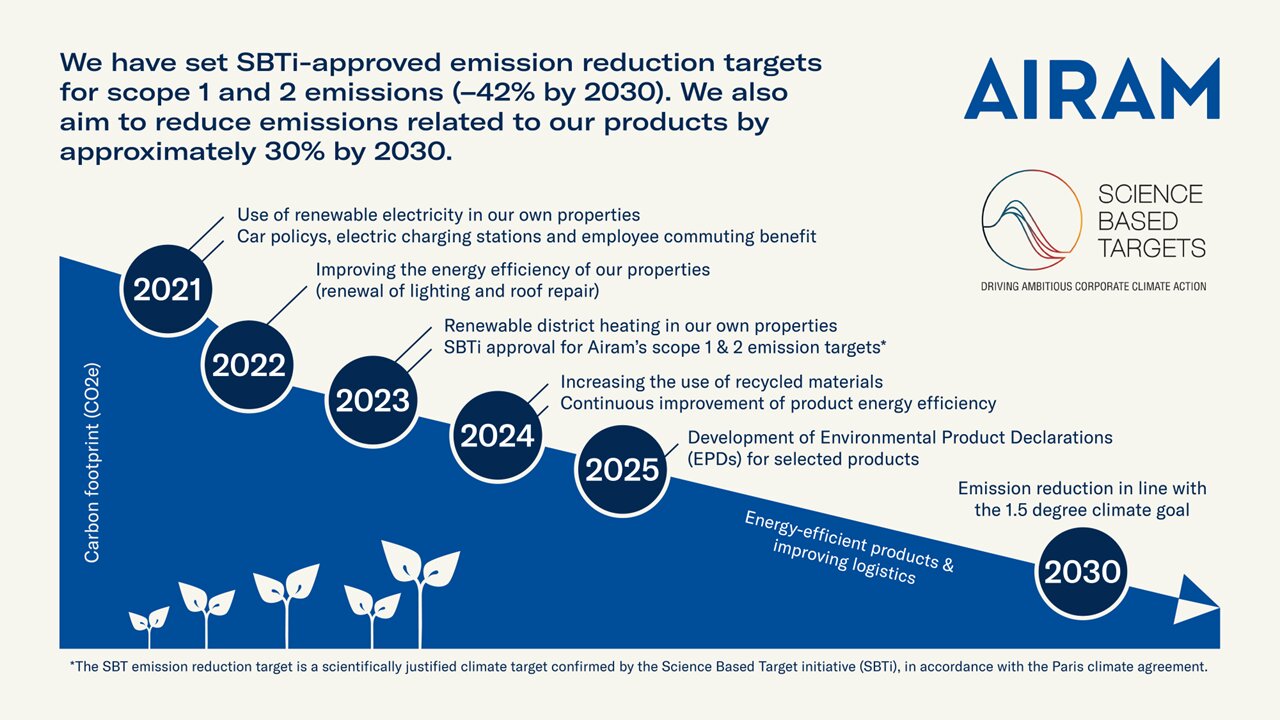
We calculate the carbon footprint of our value chain annually in accordance with the GHG Protocol and have set an emissions target in line with the Science Based Targets initiative. We aim to reduce 42% of our own direct and purchased energy emissions (scope 1 and 2) by 2030 compared to 2021. In addition, we are committed to measuring and reducing our value chain (scope 3) emissions. We have set a target to reduce the use‑phase emissions of the products we sell by 30%.
We achieved our emissions reduction target for scopes 1 and 2 in 2024. We have taken practical measures to mitigate the climate impacts of our operations, for example by improving energy efficiency in our properties by upgrading lighting, increasing insulation during roof renovations and adjusting building services systems. We use 100% certified, renewable electricity and district heating in our properties. In addition, we have improved the sorting and recycling of waste generated by our operations. For example, we reuse packaging materials where possible. We have established a company‑wide car policy, set an emissions limit for cars, and increased the number of electric vehicle charging points at our properties.
Energy efficiency of products
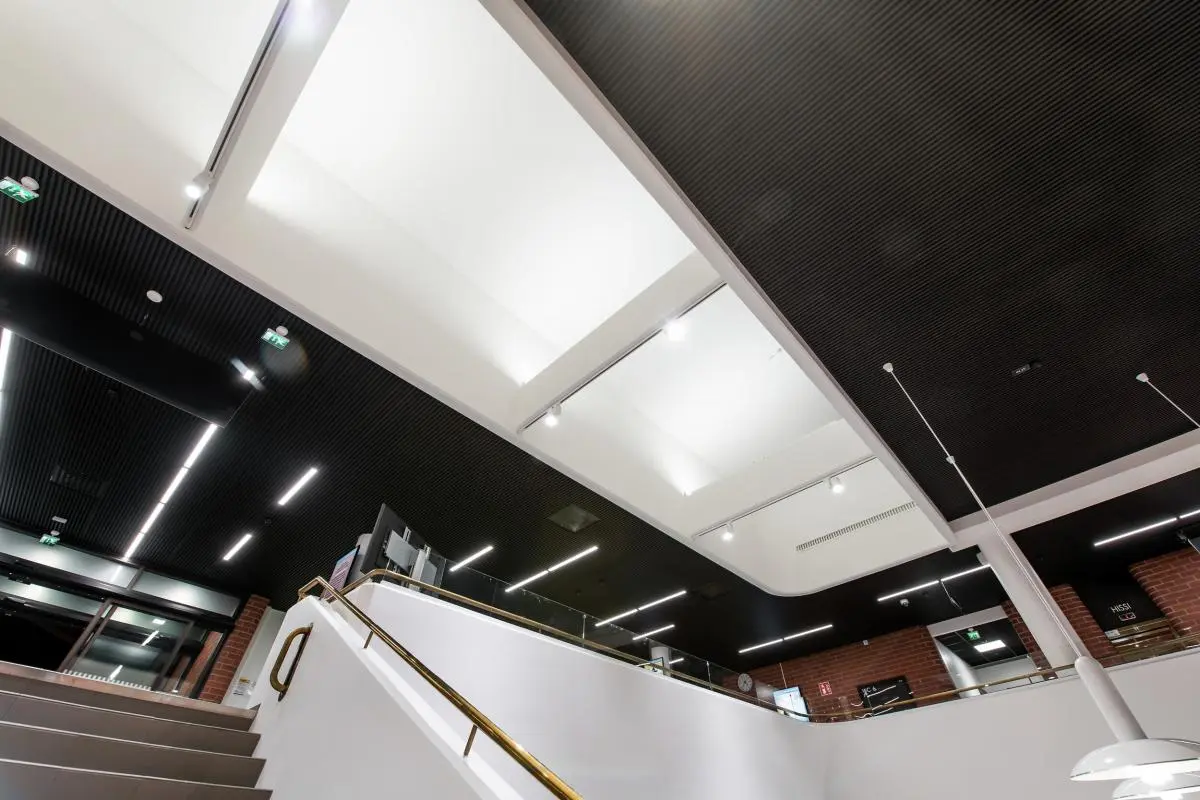
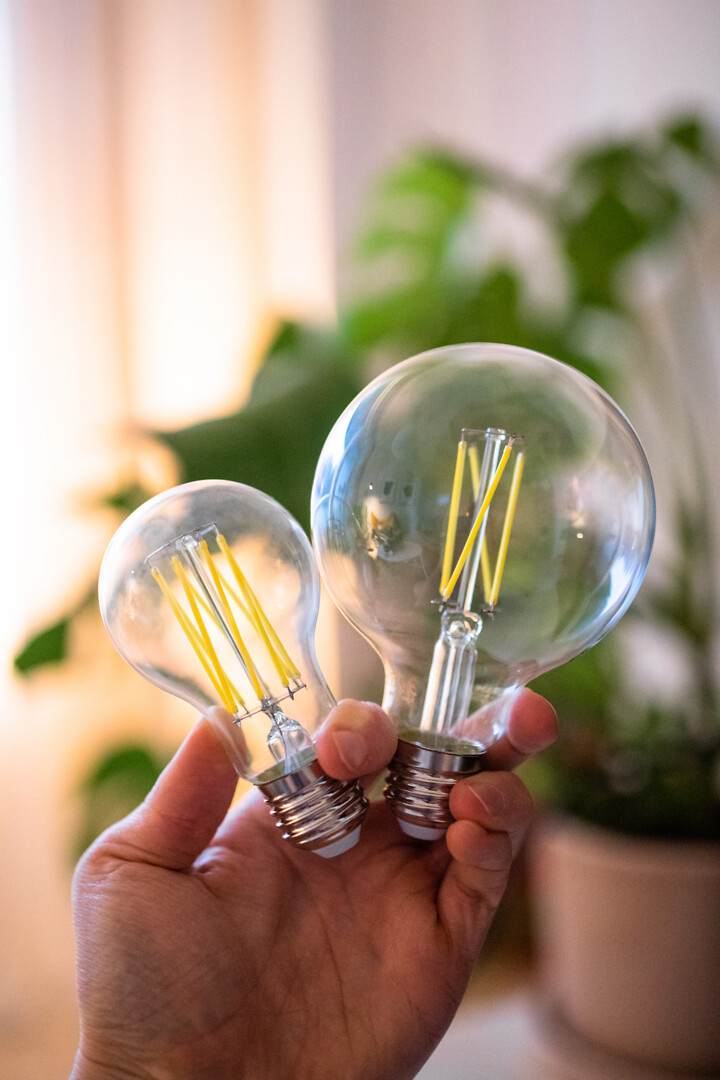
Most of our emissions are generated when our customers use our luminaires and other electrically powered products. Therefore we have set a target that complements our SBTi commitment to reduce the emissions of our products by 30 % by 2030. LED technology has significantly reduced the energy consumption of lighting, and, for example, the energy consumption of A-class LEDs is up to 60 percent lower than that of a conventional LED lamp.
The energy consumption of products can also be influenced by lighting controls, so light is used only when and to the extent it is needed in a space. Electricity consumption can also be reduced through controls and automation, such as dimming, timers, dusk sensors, motion detectors, and wireless control solutions. Our range also includes SmartHome products and products that utilize solar energy. Environmental Product Declarations (EPD) are being prepared for selected product groups; the first third-party verified EPDs were published at the end of 2025.
Materials and packaging
Airam’s starting point in material selection is product safety as well as the requirements of standards and legislation. We consider the different stages of the product’s life cycle already in product design and strive to use materials sparingly. Reducing the use of materials decreases consumption of natural resources not only in manufacturing but also in transportation. We prefer sea freight and optimize our shipments. By choosing materials suitable for their intended use, we aim to ensure product usability and a long service life. In addition, we avoid adhesives in products so that parts made from different materials are as easy as possible to recycle at the end of the product’s life cycle. We comply with REACH and RoHS chemical legislation, which restricts the use of substances harmful to the environment and human health in products.
We also want to make recycling packaging and other materials as smooth as possible. We have reduced the amount of packaging material, and 95 percent of our packaging materials are cardboard. In our operations we promote material reuse and recycling by reusing transport packaging and pallets whenever possible. We deliver other packaging materials for reuse as material.
Producer responsibility
The Waste Act obliges producers (manufacturers and importers) of electrical and electronic equipment, as well as batteries, to ensure the recycling of the products they place on the market. Producer responsibility also applies to companies that package products in Finland, import packaged products, and sell to Finland via distance selling. Airam fulfils its producer responsibility through the following producer and service organisations.
What does responsibility mean at Airam?
”Sustainability is part of product design, product development and even coffee-table conversations.”
What does a lamp’s responsible production chain look like? Why does Airam focus on the energy efficiency of its products?
Energy labels
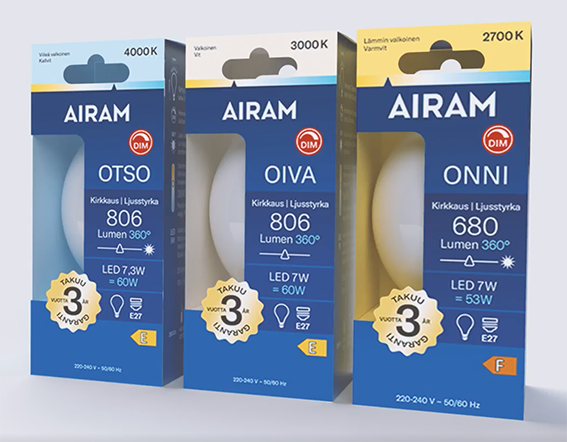
The new ecodesign and energy labelling regulations for light sources, i.e. lamps, came into force in September 2021. The revision updated, among other things, the energy efficiency requirements for light sources and the energy label scale. The energy label indicates which class a light source belongs to based on its energy consumption. The revision encourages us, the manufacturers and importers of light sources, to offer more energy-efficient products.