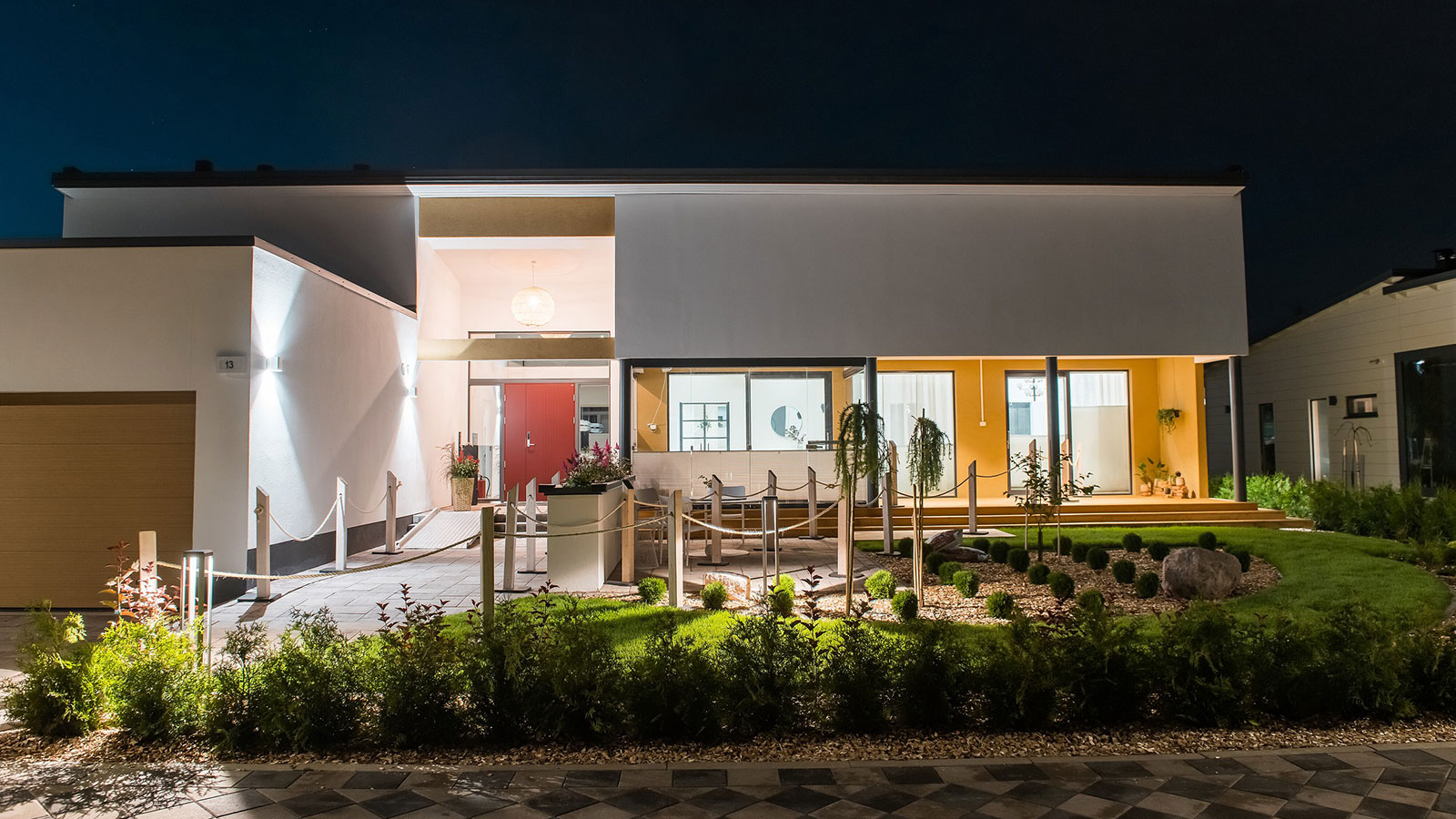
Get inspired by light
Garden and outdoor lighting
Light only where it is needed
In the Nordic countries, it is dark for half of the year. That is why it is important to plan sufficient lighting for outdoor spaces and different uses. Outdoor lighting creates both safety and atmosphere – while also offering a wonderful opportunity to express the character of the house and the people living there.
When planning outdoor lighting, start by considering the darkest time of the year. The purpose of lighting the garden and the façade is not to flood the surroundings with light or disturb neighbours, but to highlight the best features of the home.
Garden lighting should begin with considering where light is truly necessary:
- waste and recycling areas
- pathways
- outdoor living spaces
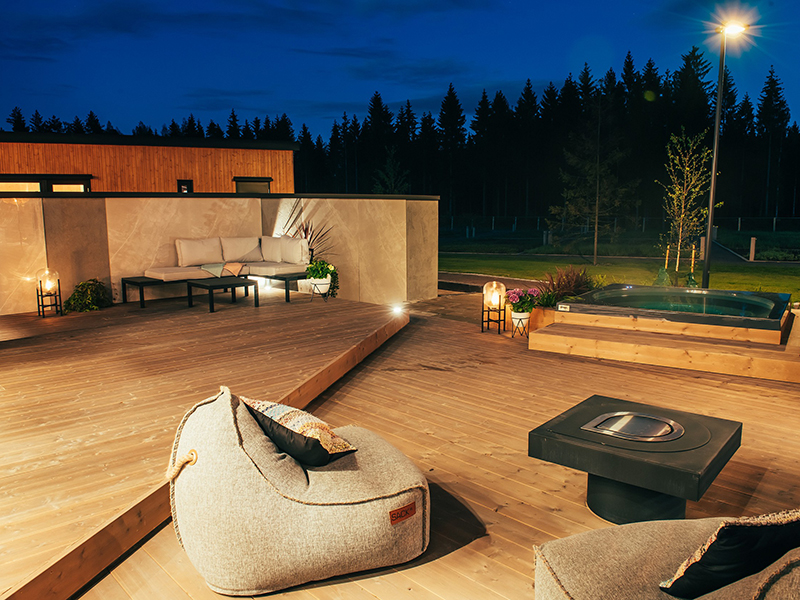
Outdoor lighting
Decorate outdoor spaces with LEDs
It is important to think about what you actually want to illuminate. Upward-facing light highlights features, while downward-facing light helps guide movement. Poorly directed lighting can become distracting and create glare for both residents and neighbours. Excessive light pollution can also disturb wildlife.
Long-lasting and energy-efficient LEDs have transformed outdoor lighting from a purely practical necessity into a way of decorating exterior spaces. In addition to fixed luminaires, different string lights and portable lamps make it easy to create atmosphere according to the season and occasion.
Get inspired by lighting – outdoors too
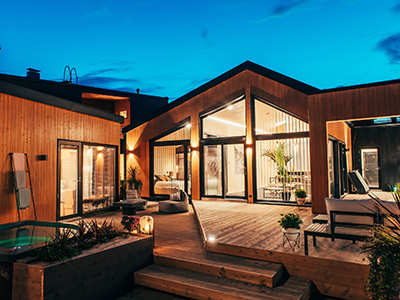
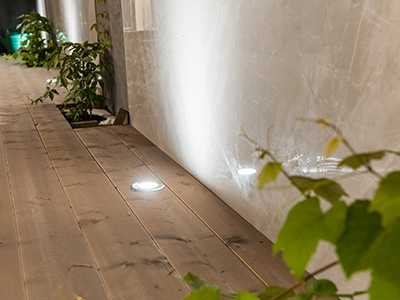
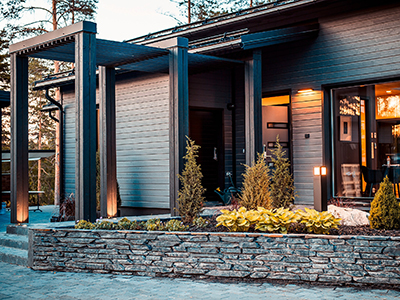
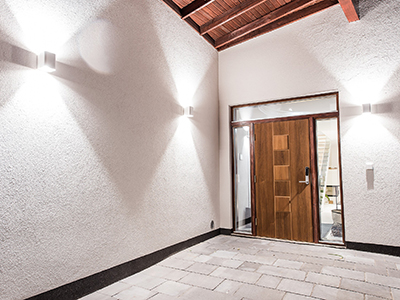
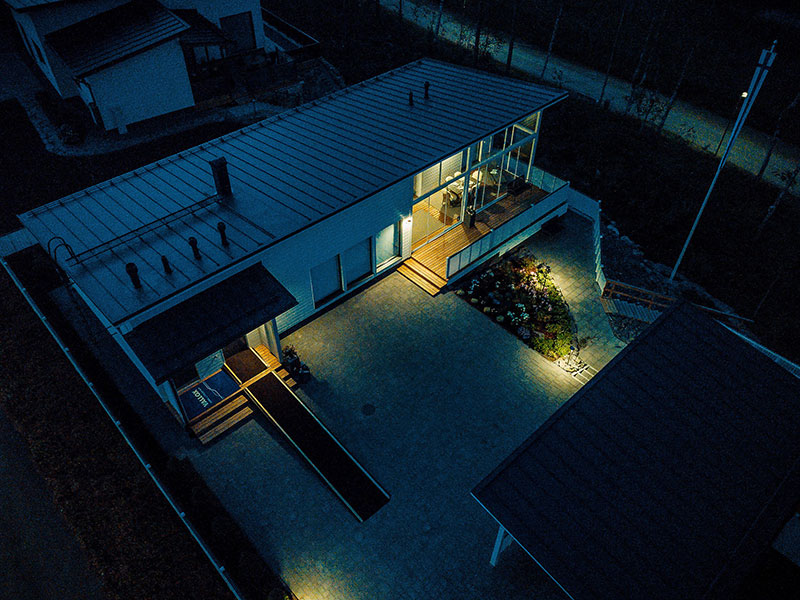
Highlight, guide and surprise with light
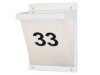
Building regulations require house numbers to be clearly visible from the street. The number must either be illuminated or positioned in a well-lit area. Illuminated house numbers help both visitors and emergency services find the correct address.
Spotlights can be used to highlight details such as beautiful trees, stone features, water elements or planting areas. Bollards and post lights clearly define pathways. Outdoor-rated LED strips can show where a handrail is located or frame the front door beautifully. Recessed deck lights highlight steps and define edges. Lighting can also help reveal potential hazards such as steep level differences.
Well-designed outdoor lighting makes moving around outside safer and more comfortable after dark.
Timers and motion sensors allow lighting to be controlled exactly as needed. Lighting can make a home feel warm and welcoming while also increasing security and discouraging unwanted visitors. With smart lighting, your home can even appear occupied while you are away.
In darkness, less light is often enough
Façade lighting highlights the style and character of a building. Outdoor lighting should always be planned with both the house and its surroundings in mind. Older buildings often suit more traditional lighting solutions and softer forms, while modern architecture can handle stronger beams and more dramatic lighting effects.
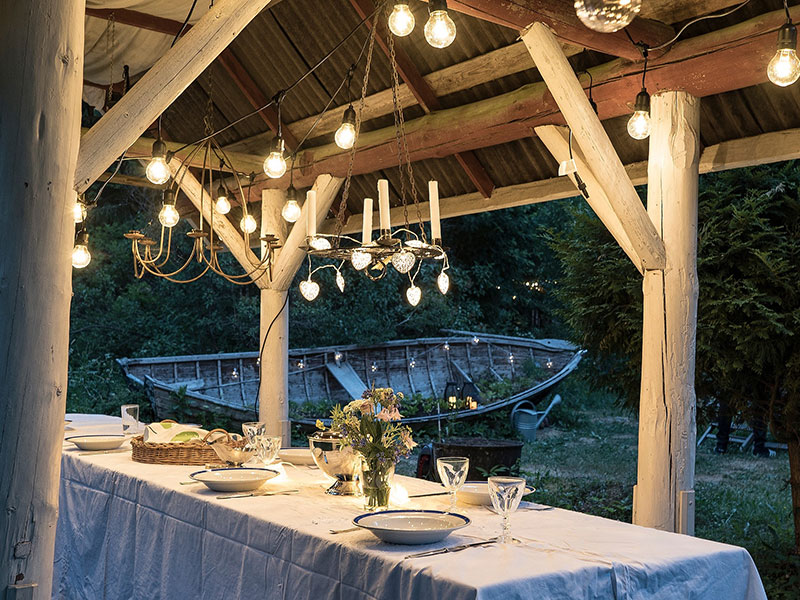
Decorative lights
Seasonal lighting all year round
Many people wonder when it is acceptable to put outdoor Christmas lights up. At Airam, we prefer to talk about seasonal lighting – because there is always a good reason to enjoy light!
In summer, planting areas can be decorated with solar lights, and as evenings become darker, beautiful string lights create atmosphere outdoors. Decorative outdoor lighting can be used on terraces, in gardens, in yards and on balconies.
Your home extends beyond its walls – so make the outdoor environment feel just as personal and inviting.
When should outdoor lighting be planned during a building project?
Preparation for outdoor lighting should begin before landscaping work is completed. This is the most cost-effective stage for installing electrical wiring. If cabling is installed too early during groundwork, heavy machinery may damage it.
It can also be difficult to determine the exact locations for lighting points while construction is still ongoing and the final layout is not yet fully visible. If the need for outdoor lighting is only realised after landscaping has been completed, additional digging may become necessary.
A practical solution is to install extra outdoor power sockets, making it easy to connect movable outdoor luminaires later if needed.
Outdoor luminaires should always have at least an IP44 rating.